“coffee bean growth” search results (7000)
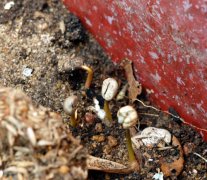
Observation on the growth process of Coffee Bean to Coffee Tree
The bud that has just emerged looks like it is ready to bloom. The seed next to the beginning of the newborn life has already sprouted, two beautiful young leaves, the small bud next to it needs refueling, it will sprout and grow leaves soon. Now the bud is not high, it is estimated to be only five or six centimeters.
2015-10-07 Coffee beans coffee growth process real shot group picture observation just come out bud
Four forms of growth and production of Ethiopian Coffee
Growth and production patterns: There are four growth production patterns in Ethiopia, and 95% of coffee is produced from these types or systems.
2014-08-22 Coffee knowledge Ethiopian coffee beans coffee encyclopedia coffee tree growth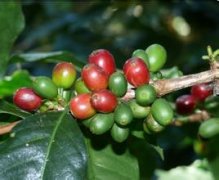
The growth cycle and picking of high-quality coffee
Coffee beans are the seeds of coffee trees. After three or four years of growth, the coffee tree matures and begins to bear fruit, with one fruit arranged in clusters or clusters along the branches. The outside of the seed is a layer of peel, which can be picked as soon as it turns red. Under the red skin (exocarp) there is a layer of pulp (mesocarp), which is a small thin layer, and then a layer of material endocarp like parchment. In
2015-01-07 Boutique coffee growth cycle picking coffee beans knots past year's
Costa Rican coffee producing area Costa Rica coffee growth pattern
High-quality Costa Rican coffee is called extra hard beans, and this kind of coffee can grow at an altitude of more than 1500 meters. Altitude has always been a problem for coffee growers. The higher the altitude, the better the coffee beans, not only because the higher altitude can increase the acidity of the coffee beans and thus increase the flavor, but also because the night temperature at the higher altitude is lower, which can make the trees grow slowly.
2016-05-26 Costa Rica Coffee Origin growth way quality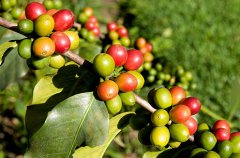
The relationship between the Flavor of Coffee and its growth altitude
We should all understand that raw coffee beans are generally graded according to their size, defect rate and altitude. The size and defect rate of raw beans are easy to understand, and many people do not quite understand why some producing areas use the altitude of coffee beans as the basis for grading. Many coffee sellers also boast that their coffee is high-altitude coffee and sell it at a high price. This is also the most encountered when telling students about grading.
2015-10-20 Coffee knowledge flavor growth altitude relationship everyone should compare understand
Organ classification of coffee
Coffee is a shallow root crop, and the plants propagated with seeds have conical roots. Root system refers to the general name of root. The root morphological distribution and depth of shade varieties / soil conditions and agricultural technical measures are different. From the point of view of varieties, the roots of small / medium grain species are shallower, while those of large grain species are deeper. Under normal circumstances, there is a thick and short taproot and many well-developed lateral roots. Yunnan small-grain coffee has a 4-year-old fruit.
2014-06-16 Coffee beans coffee organs
Introduction to the growth process of coffee beans how about Dingrui brand coffee machine
Coffee beans produced by washing account for almost 70% of the total output of coffee beans. Sometimes poor treatment of fermentation time will produce fermentation odor and special sour taste; if handled well, it can form the personalized aroma of coffee beans. At this time, the coffee beans can be sent to various places in sacks or in special containers to move the fruit in the water to the pulp removal machine and peel off the skin and pulp.
2016-06-08 Coffee beans growth process introduction Dingrui brand coffee machine how washing raw
The growth cycle of coffee and picking coffee beans are the seeds of coffee trees.
Coffee beans are the seeds of coffee trees. After three or four years of growth, the coffee tree matures and begins to bear fruit, with one fruit arranged in clusters or clusters along the branches. The outside of the seed is a layer of peel, which can be picked as soon as it turns red. Under the red skin (exocarp) there is a layer of pulp (mesocarp), which is a small thin layer, and then a layer of material endocarp like parchment. In
2015-10-17 Coffee growth cycle picking coffee beans tree knots coffee over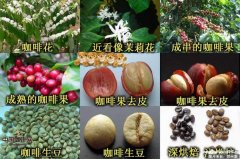
Coffee growth process
1. Seed selection, seedling planting, shaping, pruning, soil management, fertilization, pest control, flowering and fruit picking. 2. Picking can be divided into two ways: manual picking and mechanical picking. Manual picking is divided into two ways: daylighting and selective picking. High quality coffee beans can be obtained by picking.
2014-08-29 Coffee growth coffee growth process coffee encyclopedia
Correctly planting Coffee Tree Coffee Tree growth process Map
One of the characteristics of a coffee tree is that its fruit can bear fruit several times a year, and another is that flowers and fruits coexist at different stages of ripening. If the fruit is too ripe, the beans in it will rot. If the beans are not ripe, the beans will not ripen by themselves. So bean pickers often go through the same tree several times to find ripe fruit, but try their best.
2015-11-05 Right planting coffee growth process one of the traits that is it's
Culture methods of potted Coffee trees the growth process of coffee trees
There are many coffee plants in Yunnan, and they are of good quality. This is the help given by the unique climate. The purpose of planting coffee trees is to harvest high-quality coffee beans, but the cultivation process is very strict, and it can be said that appropriate climatic conditions are needed: sunshine, rainfall, soil, air temperature, as well as the way coffee beans are harvested and the production process. Will affect the quality of the coffee itself.
2015-11-05 Potted plants coffee farming methods growth processes we Yunnan many planting
Growth habits and planting techniques of Coffee trees
First, the growth habit of coffee is warm, drought-tolerant, not cold-resistant, afraid of freezing, seedlings and adults are easy to be defoliated to death by frost, and the seeds can not mature. Coffee is not strict on the land, idle land can also be planted, but with good drainage, deep soil, loose and fertile sandy soil is appropriate. Second, seed selection of planting techniques: before sowing, the germination rate of seeds should be tested. Specific method: the full grain
2015-06-21 Coffee growth habits and planting technology coffee warmth
Is the growth environment of coffee trees high?
Coffee bars that produce low-grade coffee beans like to use labor-saving methods to buy beans, but in this way, because the quality is not good, it reduces the taste of coffee and lowers the grade of coffee. The way to pick up coffee beans in some parts of Africa is to shake the coffee, drop the fruit to the ground and lift it on the ground before the fruit is actually eaten. Most regions of Brazil produce sub-grade coffee, and these regions produce coffee.
2016-05-26 Coffee growth bad environment high production low-grade coffee beans coffee Nongxi use
The growth process of Costa Rican coffee beans Fire Phoenix Manor
Costa Rican coffee has full particles, ideal acidity and unique strong flavor. Costa Rica's coffee industry, originally controlled by the Costa Rican Coffee Industry Company (InstitutodelCafdeCostaRica, ICAFE), has been taken over by the official Coffee Committee (OficinadelCaf). In exported coffee, those products that are considered to be of substandard quality are used in blue.
2016-06-14 Costa Rica coffee beans growth process fire Phoenix manor coffee
Growth and characteristics of Coffee trees
The origin of the coffee tree is Ethiopia in Africa. In botany, coffee trees belong to the evergreen trees of the subgenus Rubiaceae, and coffee beans, commonly known as coffee beans, are actually the seeds of the fruit of coffee trees. They are called coffee beans only because they are shaped like beans.
2014-09-02 Coffee knowledge coffee tree coffee tree planting coffee tree growth characteristics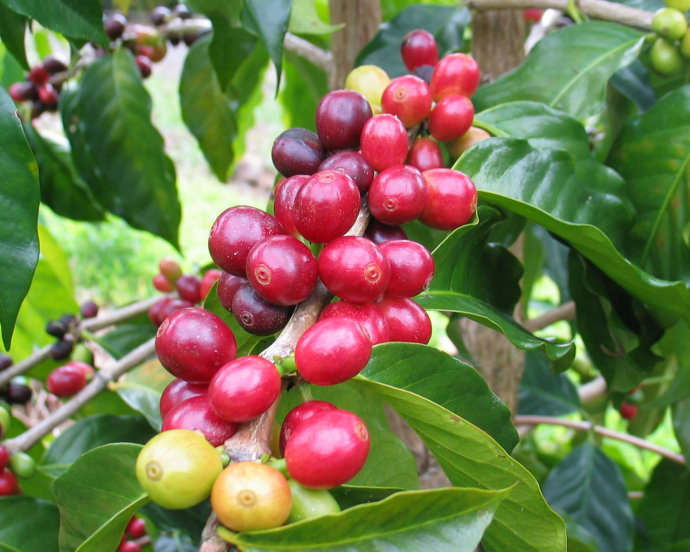
The process of Coffee Fruit from seed to growth to Post-harvest treatment Analysis of layered Anatomy of Coffee Bean
After the coffee flowers fade, they are replaced by small coffee fruits. The ripe coffee fruit is red and looks a bit like the familiar cherry, called coffee cherry. The freshman coffee fruit is green and turns red after ripening for about six months. After maturity, if it is not picked in time, it will slowly turn black. The color of mature coffee fruit is related to the variety, most coffee
2016-01-20 Coffee fruits seeds growth picking treatment process coffee beans stratification anatomy
Growth Environment and characteristics of Coffee trees
Coffee gives the public the impression that it is black, bitter and excited after drinking sleepless beverages. The coffee beans we see in the coffee shop are brown, roasted beans and amber.
2014-07-17 Coffee knowledge coffee tree growth coffee tree characteristics
Yunnan small-grain coffee beans with moderate sour taste introduce the growth environment, altitude and other fine coffee beans
Small-grain coffee is suitable for growing in the mountains at an altitude of 800 to 1800 meters. If the altitude is too high, it will taste sour, and if it is too low, it will taste bitter. Small grains of coffee are mostly planted in dry and hot valleys about 1100 meters above sea level, so they are moderately sour, rich and mellow. There is a unique environment suitable for the growth of small seed coffee in many areas of Yunnan, and the quality of small seed coffee is excellent. The planting area is mainly distributed in the
2016-07-06 Sour medium Yunnan small grains coffee beans introduction growth environment altitude boutique
The growth of a coffee bean from fruit to raw coffee bean
A coffee tree can harvest 3-5 kg of fruit, and raw coffee beans account for 1. 5% of the fruit quality. Going from fruit to raw coffee beans is really a time-consuming and laborious task. Arabian, Robusta and Liberian Arabian coffee account for about 2% of the world's coffee production. The plant is not suitable for high temperature, low temperature, more rain and less rain. Coffee beans are oval and flat, with high quality
2015-03-20 Fruit coffee beans one growth coffee tree can harvest 3-5 kg
The topographical and climatic conditions in Kenya are very suitable for the growth of high-quality coffee.
Kenyan coffee dates back to 1893. Coffee was later grown on a large scale by the British on the plateau at an altitude of 1400 to 2100 meters, where there is volcanic ash soil rich in organic matter. In fact, most coffee is now grown on the flatter slopes around the snow-capped Mount Kenya (the main peak is 5199 meters high). Kenya is located in the tropical monsoon area.
2016-06-17 Kenya with method topography climate conditions suitable quality coffee growth